Coastal Rail Upgrade Aims to Make Daily Travel Faster and More Reliable
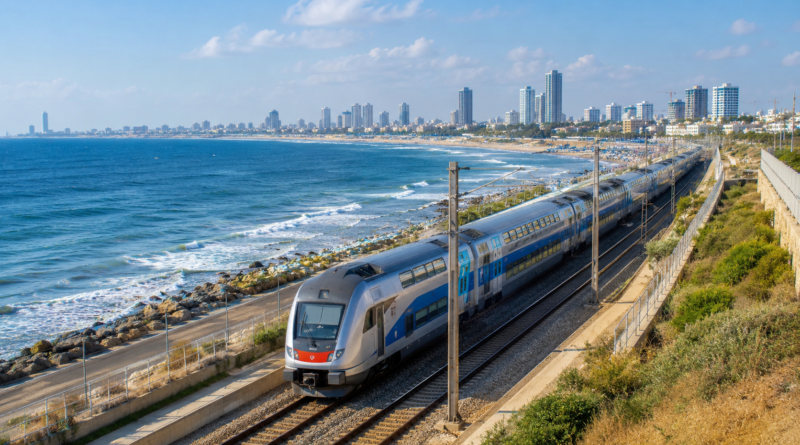
Israel’s Mediterranean rail corridor is entering a new phase as transport planners work to increase capacity, improve station access and make daily travel more reliable. The coastal route connects several of the country’s busiest urban areas, so even a small delay can affect thousands of passengers during morning and evening peaks.
The upgrade program focuses on tracks, signaling, stations and the systems that coordinate train movement. Older infrastructure was designed for fewer services and lower passenger numbers. Today, growing communities and changing work patterns require trains to run more frequently without sacrificing safety.
Digital signaling is one of the most important improvements. Modern systems allow dispatchers to monitor trains in real time and manage the distance between services more precisely. When an incident occurs, operators can react faster, adjust schedules and give passengers clearer information through station displays and mobile platforms.
Stations are also being redesigned as local transport hubs rather than simple boarding points. Better pedestrian routes, protected bicycle parking and more convenient bus connections can reduce the number of short car trips around major stations. Accessibility upgrades, including improved lifts, platforms and signs, are intended to make travel easier for older passengers and people with disabilities.
Construction along an active railway is complicated. Most work must be completed while regular services continue, which means engineers often schedule demanding tasks at night or during limited weekend closures. Temporary speed restrictions may still cause inconvenience, but careful phasing helps prevent longer disruptions.
Environmental planning is another part of the project. Rail travel can move large numbers of people using less energy per passenger than private cars. However, new infrastructure must also address noise, coastal habitats and the effect of construction on nearby neighborhoods. Acoustic barriers, careful drainage and landscape restoration are being considered alongside engineering work.
The biggest test will be whether additional capacity produces a dependable timetable. Passengers are more likely to leave their cars at home when trains arrive frequently, transfers are simple and service information is accurate. Infrastructure alone cannot solve every problem; maintenance, staffing and communication remain equally important.
If the program succeeds, the coastal railway could become the backbone of a more connected transport network. Faster journeys would support employment across several cities, while improved local links could make stations easier to reach without driving. For commuters, the value of the investment will be measured in something very practical: fewer uncertain mornings and more predictable journeys home.