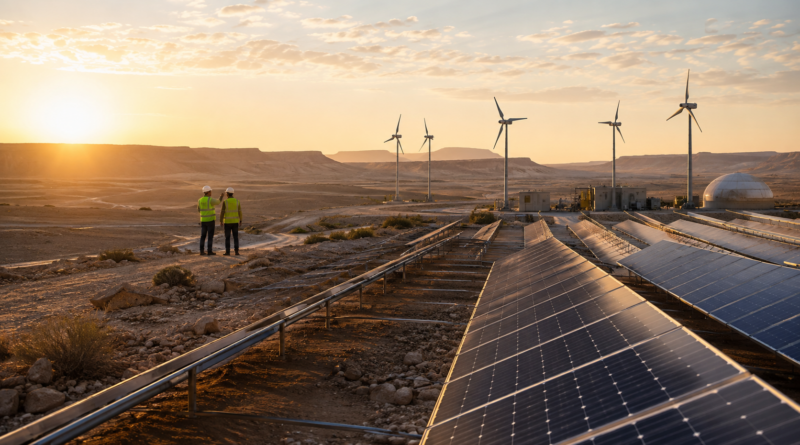
How Israel’s Desert Energy Labs Are Building a Cleaner Grid
Across the Negev, a new generation of energy laboratories is turning harsh desert conditions into a practical testing ground for a cleaner power system. High temperatures, intense sunlight and wide daily swings in demand create a useful environment for engineers who want to understand how renewable technology performs outside controlled settings.
Several research teams are combining solar arrays with battery storage, smart forecasting software and small-scale wind systems. The goal is not simply to produce more electricity at midday. The larger challenge is to keep power available after sunset, when homes and businesses continue to consume energy but solar generation falls quickly.
Modern test sites collect detailed information about dust, heat, panel efficiency and storage cycles. That data helps operators decide when equipment needs cleaning, how batteries should be charged and which parts are likely to fail. Predictive maintenance can reduce downtime while lowering the cost of running facilities in remote areas.
Another important development is the use of artificial intelligence to forecast short-term production. Weather conditions can change quickly, even in dry regions. By combining satellite images, local sensors and historical records, grid managers can estimate how much renewable electricity will be available during the next few hours. Better forecasts make it easier to balance supply without relying as heavily on fossil-fuel backup.
Desert projects are also exploring ways to share energy with nearby farms and communities. Agricultural operations often need power for irrigation, cooling and water treatment. Local microgrids can connect solar generation, batteries and essential equipment, allowing critical systems to keep working during a wider outage.
The technology is promising, but researchers still face practical questions. Batteries remain expensive, grid connections can take years to approve, and large projects must consider their effect on wildlife and open landscapes. Engineers are therefore testing smaller modular systems that can expand gradually instead of requiring one enormous installation.
The lessons emerging from these laboratories extend beyond Israel. Regions with strong sunlight in Africa, Asia and the Middle East face similar problems: growing electricity demand, limited water and the need for reliable infrastructure. Solutions tested in the Negev may eventually support cleaner grids in many dry climates.
For now, the desert serves as both a challenge and an advantage. Conditions that once seemed hostile to energy development are helping researchers design systems that are tougher, smarter and better prepared for a renewable future. Local universities and private companies are now expanding cooperaLocal universities and private companies are now expanding cooperation around these trials. Students gain access to real operating data, while manufacturers can improve equipment before commercial deployment. That partnership may be as important as any single invention because it connects research directly with the needs of communities and grid operators.