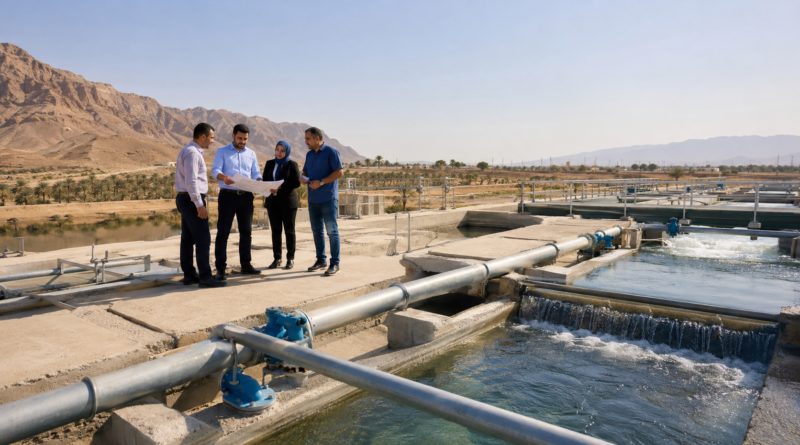
Water Cooperation Projects Offer a Practical Path Through Regional Scarcity
Water scarcity is one of the Middle East’s most persistent challenges, but it is also creating new reasons for practical cooperation. Across the region, engineers, farmers and local authorities are testing projects that treat wastewater, reduce leaks and deliver more reliable irrigation to communities facing hotter and drier conditions.
The most promising programs begin with a simple idea: water systems work better when information is shared. A river, aquifer or pipeline rarely follows political boundaries neatly. Monitoring rainfall, groundwater levels and demand across a wider area gives planners a clearer picture than isolated local measurements.
Modern treatment plants are playing a central role. Instead of releasing used water after basic processing, advanced facilities can clean it for agriculture and industry. This approach protects scarce freshwater supplies for homes while giving farmers a more predictable source during dry periods. Quality standards and regular testing remain essential, especially when recycled water is used near food crops.
Technology is also helping operators find waste before it becomes a crisis. Smart meters and pressure sensors can identify unusual changes inside distribution networks. A small leak that once remained hidden for months may now trigger an alert within hours. Repair teams can respond more quickly, saving water and reducing damage to roads and nearby buildings.
Cooperation is not limited to large national projects. Municipalities, universities and farming groups are exchanging practical knowledge about drip irrigation, soil moisture sensors and drought-resistant crops. These smaller partnerships often produce results faster because they focus on shared technical problems rather than broad political agreements.
Financing remains difficult. Water infrastructure is expensive, and poorer communities may struggle to pay for modern equipment or long-term maintenance. International development organizations and private investors are therefore exploring blended funding, where public money reduces risk and commercial partners provide additional capital and expertise.
Trust is another challenge. Data about reservoirs and consumption can be politically sensitive, so successful programs need clear rules about ownership, access and security. Independent scientific review can help participants verify results without giving any one party complete control.
The benefits extend beyond water itself. Reliable supplies support public health, agriculture, tourism and urban growth. Joint projects also create regular contact among professionals who may otherwise have few opportunities to work together.
No single facility can solve the region’s water pressures. Yet a network of practical agreements, transparent data and well-maintained technology can reduce uncertainty. In a place where every dry season tests infrastructure, cooperation may become not only an environmental choice but an economic necessity.