Voodoo Casino Germany: Exploring a Modern Digital Casino Experience
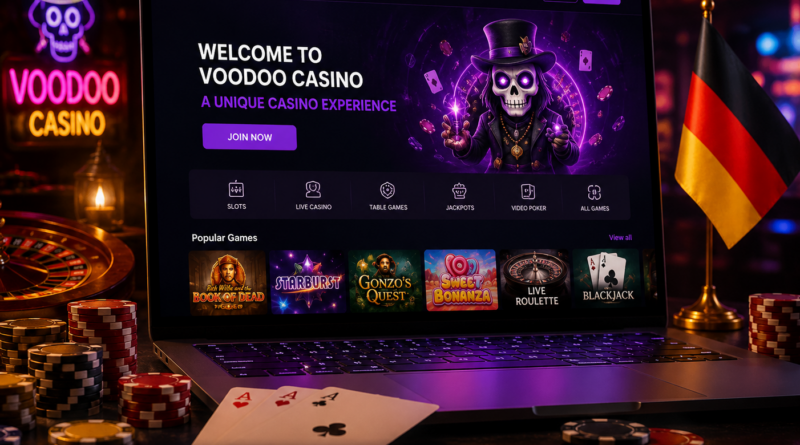
The online casino industry has developed into a highly digital form of entertainment, combining extensive game libraries with browser-based access, responsive interfaces, and increasingly sophisticated account technology. German-speaking players now encounter casino platforms that place greater emphasis on convenient navigation, clear categorization, and fast access across different devices. The digital environment represented by www.voodoo.casino/de reflects this broader movement toward accessible, structured online casino platforms.
The Evolution of Online Casino Entertainment
Traditional casino entertainment was inherently tied to a physical location. Players had to travel to a casino, interact with a physical gaming environment, and organize their leisure time around opening hours and geographic availability. The internet introduced a fundamentally different model in which casino entertainment could be accessed through a browser from a connected device.
This transformation has continued as smartphones, tablets, and modern browsers have become everyday tools. Online platforms can now provide a centralized environment where users browse different categories, review available games, and navigate between sections without moving between physical locations.
The German market has developed within a specific regulatory environment, making transparency and responsible participation important elements of the modern online casino experience. The Interstate Treaty on Gambling 2021 established the current framework for online gambling in Germany, including licensing and player-protection requirements. This has helped shape expectations around how regulated digital casino services should operate.
A Structured Digital Casino Catalog
One of the defining characteristics of a modern online casino is the way its content is organized. A large collection of games can become difficult to navigate if every title is presented without meaningful structure. Categories, search functionality, and clearly differentiated sections therefore play an important role in the overall user experience.
A well-designed catalog allows visitors to move naturally between different types of casino entertainment. Instead of treating the library as a single continuous collection, the interface can create logical pathways that help users identify the type of game environment they are interested in exploring.
This approach also makes the platform more approachable for newcomers. Users do not necessarily need to know the name of a particular game before arriving. They can browse the available categories and become familiar with the overall structure at their own pace.
The catalog is consequently more than a technical inventory. It becomes part of the platform’s entertainment interface.
Browser-Based Access and Everyday Convenience
The biggest practical difference between online and land-based casino entertainment is accessibility. A browser-based platform does not require users to travel to a particular venue, which makes digital entertainment considerably more flexible in terms of location.
Modern websites are also designed to work across different screen sizes. A desktop browser can provide a larger interface for detailed navigation, while a smartphone offers a more portable environment. Tablets occupy a middle ground, providing a larger display while retaining the convenience of mobile access.
This flexibility has become an important expectation across digital entertainment generally. Users increasingly expect websites to adapt automatically to the device they are using rather than requiring separate versions or complicated configurations.
For an online casino, responsive design is particularly important because menus, game previews, account controls, and responsible-gaming information all need to remain accessible regardless of screen size.
Navigation Without Unnecessary Complexity
A sophisticated platform does not necessarily need a complicated interface. In fact, the most effective digital casino experiences often depend on reducing unnecessary steps between the catalog and the information a user wants to access.
Clear menus allow visitors to understand where different sections are located. Search functions provide a direct route for users who already know what they are looking for, while category pages support broader exploration.
The visual hierarchy of the platform also matters. Important navigation elements should be easy to identify without overwhelming the page with excessive promotional material or distracting interface components.
This principle is especially relevant for users accessing a casino through mobile devices. Limited screen space means that every interface element needs to serve a clear purpose.
Technology Behind Online Casino Platforms
The simplicity visible in a browser is supported by a considerable technical infrastructure. Online casino platforms need to manage large numbers of simultaneous visitors while delivering interactive games, account services, payment interfaces, security systems, and other digital functions.
Cloud infrastructure can provide scalable computing resources, allowing services to accommodate changes in traffic. Content delivery technologies can also help distribute static assets efficiently across different geographic locations.
Security is another fundamental component. Online platforms handle account information and, where permitted, financial transactions, making encryption, secure authentication, fraud prevention, and data protection essential parts of the underlying architecture.
For the user, these systems should remain largely invisible. The desired experience is a responsive website in which pages load efficiently and interactive elements behave predictably.
Responsible Gambling as Part of the Digital Experience
The convenience of online gambling also creates a need for clear responsible-gaming mechanisms. Unlike a physical casino, a digital platform can be available continuously, which makes user-control tools particularly important.
Germany’s regulated gambling framework includes measures designed to protect players and restrict problematic gambling behavior. The Gemeinsame Glücksspielbehörde der Länder, or GGL, oversees significant aspects of the German gambling market and provides regulatory information concerning licensed gambling operators.
Responsible gambling should therefore be understood as part of the platform experience rather than an isolated legal requirement. Clear information, accessible limits, self-exclusion mechanisms, and age-related protections can help users maintain control over their participation.
A mature digital casino environment recognizes that convenience and responsibility need to operate together.
Security and Trust in the German Market
Trust is particularly important when entertainment platforms operate in a regulated environment. Users need confidence that websites protect their personal information and that relevant rules governing online gambling are being followed.
Modern security architecture can include encrypted communication, controlled account access, monitoring systems, and safeguards against unauthorized activity. These measures operate behind the interface but have a direct effect on the overall reliability of the service.
Regulation provides another layer of confidence by establishing formal requirements for licensed operators. For German users, checking whether an online gambling service is appropriately licensed remains an important consideration before participating.
The broader trend is clear: digital convenience alone is no longer enough. Online casino platforms also need to demonstrate responsible operational standards.
The Mobile Transformation of Casino Entertainment
Smartphones have changed the relationship between consumers and digital services across virtually every entertainment category. Online casinos are part of this transformation, with mobile browsers and responsive websites making casino catalogs available on smaller screens.
Mobile accessibility is not simply about shrinking a desktop page. Interfaces need to account for touch navigation, limited screen dimensions, different connection conditions, and the expectations of users accustomed to fast mobile applications.
A well-optimized mobile experience keeps essential navigation visible while allowing users to move through categories without unnecessary scrolling or complicated menus.
At the same time, responsible-gaming information and account controls need to remain accessible rather than being hidden behind an unnecessarily complex interface.
Game Discovery and Personal Choice
The growth of digital casino catalogs has made discovery an increasingly important part of the user journey. A physical casino can use architecture, signage, and physical placement to guide visitors, whereas an online platform must accomplish the same task through its interface.
Categories and search tools effectively replace the physical organization of a casino floor. They allow users to browse different forms of entertainment and decide where to focus their attention.
This also gives digital platforms considerable flexibility in how they present their catalogs. New content can be introduced without physically changing the environment, while existing sections can be reorganized as the library develops.
For users, the result can be a more personalized browsing experience in which the catalog responds to individual interests rather than imposing a fixed path through the entertainment environment.
The Importance of Transparent Information
A premium online casino experience should make essential information easy to understand. Game descriptions, rules, relevant terms, responsible-gaming resources, and account information should not require extensive searching.
Transparency becomes particularly important in gambling because users need to understand the nature of the entertainment before participating. Clear explanations can help distinguish different game mechanics and provide appropriate context.
This is also where good interface design and responsible gambling overlap. A transparent platform does not need to overwhelm visitors with technical information, but it should ensure that important details are available when users need them.
The objective is an environment in which convenience does not come at the expense of clarity.
Where Digital Casino Platforms Are Heading
The future of online casino entertainment will likely be shaped by several parallel developments: faster connectivity, improved mobile interfaces, more sophisticated personalization, stronger security systems, and increasingly standardized responsible-gambling mechanisms.
Artificial intelligence and data-driven recommendation systems may also influence how large game catalogs are organized and presented. Used appropriately, these technologies can help users navigate extensive libraries without making the interface more complicated.
At the same time, regulation will remain an important influence on the German market. The development of Germany’s licensing and player-protection framework means that digital casino operators must balance technological innovation with compliance and responsible participation.
The strongest platforms will therefore be those that combine accessibility with transparency rather than treating convenience as their only objective.
A More Modern Way to Explore Online Casino Entertainment
The evolution of online casinos reflects a much wider transformation in digital entertainment. Physical location has become less important, catalogs have replaced fixed programming environments, and responsive technology allows users to access services across desktops, tablets, and smartphones.
For German-speaking audiences, the quality of the overall experience depends not only on the size of a catalog but also on how clearly that catalog is presented, how efficiently the platform operates, and how prominently responsible participation is supported.
A modern digital casino should make navigation straightforward while keeping security, transparency, and user control visible throughout the experience. Users can explore the available categories, review the information provided, and make informed decisions within the applicable German regulatory framework.