How Regional Startups Are Rebuilding the Middle East’s Logistics Network
A new group of logistics startups is changing how goods move between warehouses, shops and customers across the Middle East. Their tools are designed for a region where fast-growing cities, long desert routes and busy international ports create both opportunities and costly delays.
The sector’s biggest challenge is visibility. A shipment may pass through several carriers, customs checkpoints and storage facilities before reaching its destination. When these systems do not communicate, businesses struggle to predict arrival times or explain delays to customers. Startups are building shared dashboards that combine location data, warehouse inventory and transport schedules in one place.
Artificial intelligence is increasingly used to plan routes. Instead of choosing the shortest road, software can consider traffic, delivery windows, vehicle capacity, fuel use and extreme weather. A better route may save only a few minutes for one driver, but the combined effect across hundreds of daily deliveries can reduce operating costs significantly.
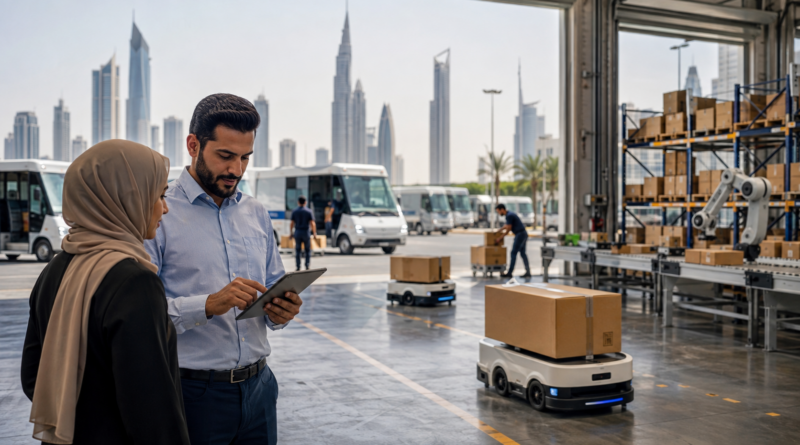
Warehouses are also becoming more automated. Small mobile robots can carry shelves or parcels between workers, while cameras check labels and package dimensions. These systems do not remove the need for people. They reduce repetitive walking and allow staff to focus on quality control, exceptions and customer problems.
Electric delivery vehicles are another area of experimentation. Short urban routes are well suited to smaller battery-powered vans, especially when charging is available at a central depot. High temperatures can affect batteries, so operators are collecting local performance data before expanding their fleets.
For smaller retailers, the most useful innovation may be flexible fulfillment. Instead of building an expensive warehouse, a growing online store can rent space and services only when orders arrive. Shared facilities provide packing, storage and delivery connections, helping young businesses compete with larger companies.
Cross-border trade remains more complicated. Customs documents, product rules and payment systems vary between markets. Several platforms now help companies prepare forms, calculate duties and track approvals. Automation can reduce errors, but experienced specialists are still needed for unusual or sensitive shipments.
Investors are interested because e-commerce and regional manufacturing continue to grow. Yet the strongest startups will need to prove that their technology works outside a demonstration center. Reliability, cybersecurity and customer support matter as much as impressive software.
The broader result could be a logistics network that is more transparent and efficient. When businesses know where goods are, when they will arrive and how much delivery will cost, they can hold less emergency stock and serve customers more confidently. In a region built around trade, better coordination may become a major competitive advantage.