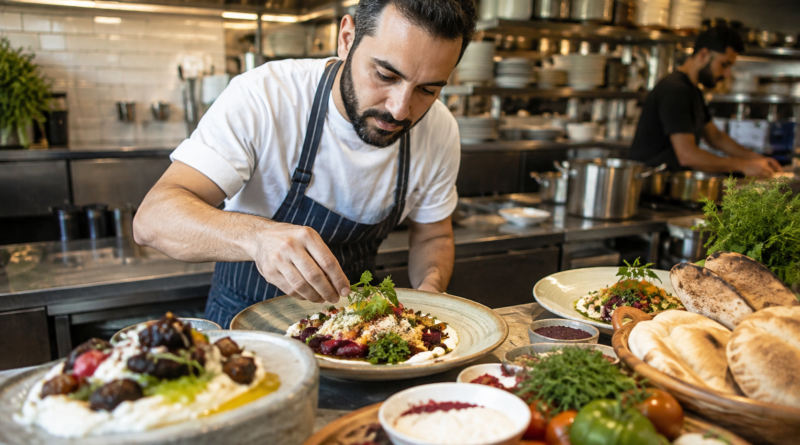
How Young Chefs Are Reimagining Traditional Regional Food
A growing number of chefs are looking at traditional Israeli and Middle Eastern food with fresh curiosity. Their aim is not to replace familiar dishes with fashionable decoration. The most interesting kitchens are studying old techniques, seasonal ingredients and family recipes, then adapting them to modern restaurants without losing the character that made them meaningful.
Vegetables are at the center of this movement. Tomatoes, eggplant, peppers, herbs and legumes have always shaped regional cooking, but chefs are treating them with the same attention once reserved for expensive meat. Slow roasting, smoking, fermentation and careful grilling can transform simple produce while keeping flavors recognizable.
Bread remains equally important. Fresh pita, flatbreads and long-fermented loaves connect meals to daily life and shared tables. Some bakeries are experimenting with heritage grains that offer deeper flavor and may require less irrigation. Working with these grains is difficult because their flour behaves differently, but the results can support both culinary variety and local agriculture.
Many modern menus are also influenced by migration. Families brought cooking traditions from North Africa, Eastern Europe, Central Asia and neighboring Middle Eastern communities. Restaurants are now presenting these influences side by side, showing that the region’s cuisine has never been a single fixed style.
The challenge is respect. A chef can easily turn a humble dish into an expensive trend while ignoring the people who preserved it. Responsible restaurants credit sources, work with local producers and explain the story behind a recipe. Some invite home cooks to collaborate or host special meals focused on a particular community.
Technology plays a quieter role. Precise temperature control, better refrigeration and modern ovens make it easier to reproduce slow traditional processes consistently. These tools can improve safety and reduce waste, but they are most useful when they support knowledge rather than replace it.
Diners are responding to food that feels both new and familiar. A plate may have a cleaner presentation, yet the aroma of spices or freshly baked bread can recall a family kitchen. That emotional connection gives modern regional cuisine unusual depth.
The movement also reflects wider concerns about sustainability. Menus built around vegetables, grains and legumes can use fewer resources, while purchasing seasonal produce reduces long-distance transport. Chefs are learning to use stems, leaves and leftover bread instead of treating them as waste.
Tradition survives when people continue to cook it, question it and share it. By combining careful research with contemporary skill, today’s chefs are showing that culinary heritage can evolve without becoming unrecognizable.