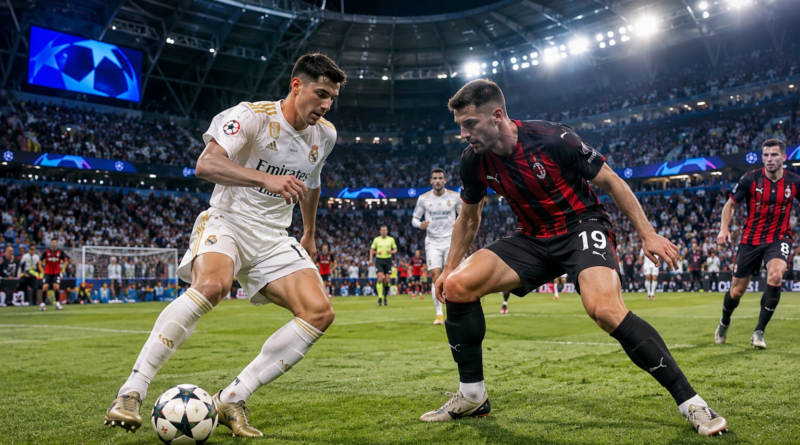
When Football Cultures Collide: The Lasting Appeal of European Club Competitions
European club football has a special ability to bring different footballing worlds together. A team built around patient possession may face an opponent whose greatest strength is rapid counterattacking. Clubs with generations of domestic success can meet ambitious newcomers eager to establish their reputation on a continental stage. These encounters create something more interesting than a simple comparison of individual players: they reveal how different football cultures approach the same challenge.
The appeal of European competition lies partly in this contrast. Every international fixture introduces new tactical questions, unfamiliar opponents and a different atmosphere. Supporters can follow the biggest moments through short summaries, but the complete experience offers considerably more. Exploring European club football replays allows viewers to revisit the entire contest, understand how its momentum developed and appreciate the decisions that shaped the final result.
A Meeting Place for Different Footballing Traditions
Domestic leagues develop their own rhythms and preferences. Some competitions are associated with technical combinations and positional play, while others are known for physical intensity, defensive organisation or direct attacking football. European tournaments bring these approaches into contact, often producing fascinating tactical contrasts.
A team accustomed to controlling possession at home may discover that its European opponent presses much more aggressively. A club that usually relies on quick transitions might have to find solutions against a defence that refuses to leave space behind its back line. The challenge is not simply to play familiar football more effectively. It is to understand the opponent’s strengths and adapt without losing the qualities that make the team successful.
These differences become particularly visible across a two-legged knockout tie. The first encounter provides an initial tactical picture, while the return match introduces a new set of circumstances. Managers must consider the aggregate score, the opponent’s likely response and the amount of risk their players can afford to take.
Watching both matches in full makes the evolution of the contest easier to follow. Small adjustments in the first meeting can have a significant impact on the second, especially when both teams have had time to study one another.
The Tactical Chess Match Behind the Spectacle
European fixtures often attract attention because of the players involved, but the tactical relationship between the teams can be equally compelling. Coaches prepare for specific threats, identify areas where they can create numerical advantages and decide how aggressively to challenge the opposition.
One side might use a high defensive line to compress the playing area and keep the opponent away from its penalty box. Another may attempt to exploit the space behind that line with quick forward passes and diagonal runs. Midfield positioning becomes crucial because it determines whether attacks can progress through the centre or must be developed along the wings.
A full match reveals how these ideas work in practice. Viewers can observe whether the pressing structure remains coordinated, how defenders respond when an opponent changes position and which players are responsible for creating passing lanes. They can also notice when an apparently successful tactical plan begins to lose effectiveness.
The most interesting developments are not always dramatic. A midfielder moving a few metres deeper, a full-back choosing to remain behind an attack or a forward changing the direction of his pressing run can gradually alter the balance of a contest.
Why the First Leg Is Only the Beginning
Knockout football has a unique narrative structure. Unlike a regular league fixture, a two-legged tie is divided into separate encounters connected by one overall objective. The first match establishes the situation, but it rarely provides the complete answer.
A team that wins the opening leg may approach the return match with greater caution, concentrating on defensive distances and avoiding unnecessary risks. Its opponent might respond by increasing the tempo, pressing higher and committing additional players forward. If the aggregate score changes, both sides may need to reconsider their plans almost immediately.
This creates a distinctive psychological dimension. A team can dominate the opening stages but become increasingly nervous as the opponent begins to threaten. Another may remain patient, waiting for an opportunity to change the direction of the tie.
Following complete replays helps preserve this progression. Supporters can revisit the moments when the balance shifted, identify the decisions that influenced the second encounter and understand why certain substitutions or tactical changes became decisive.
The Importance of Adaptability
At the highest level, technical quality is essential, but adaptability often separates successful teams from those that struggle when their original plan fails. European competition exposes clubs to opponents with unfamiliar strengths, and managers must prepare for situations that may not occur regularly in domestic football.
A possession-oriented team might need to become more direct when its opponent blocks the central passing lanes. A side that usually presses high may decide to defend deeper against attackers who are especially dangerous in open space. These adjustments require players to understand not only their individual responsibilities but also the broader purpose of the tactical change.
Adaptability can also be seen in the use of substitutions. Introducing a faster forward may create a threat behind the defence, while an additional midfielder can help restore control after a difficult period. Sometimes a substitution changes the team’s structure; in other cases, it simply gives the existing system a different quality.
Watching the full ninety minutes allows viewers to evaluate these choices. It becomes possible to see whether the new player changes the rhythm, whether the opponent responds effectively and how the match develops after the adjustment.
Individual Duels That Influence Entire Matches
European club football brings together players who may have very different experiences and footballing backgrounds. Their individual battles often become important parts of the wider contest.
A winger facing an experienced full-back must decide whether to challenge directly, move inside or combine with a teammate. A striker may spend much of the match trying to create separation from two central defenders. In midfield, a creative player can be followed closely by an opponent whose primary task is to limit his influence.
These duels are not isolated from the rest of the team. When one player attracts two defenders, space can become available elsewhere. A successful defensive challenge may create an opportunity for a counterattack, while a forward’s movement can force the opposing back line to change its positioning.
A highlight package may show the successful dribble or the final tackle. A complete match reveals the repeated exchanges that came before it, including the moments when a player changed his approach after recognising the opponent’s habits.
This makes rewatching particularly valuable for supporters who enjoy analysing performances. It also gives greater recognition to players whose influence is based on consistency rather than spectacular statistics.
European Atmospheres Have Their Own Identity
The experience of a continental match is shaped by more than the quality of football. Stadiums across Europe have different traditions, architecture and relationships with their clubs. The atmosphere surrounding a major fixture can reflect local history, regional pride and the importance of representing a domestic competition on an international stage.
Some grounds are known for intense, close-to-the-pitch atmospheres. Others create a vast visual spectacle, with supporters filling large stands and producing a powerful collective response. The sound of the crowd often changes as the match develops, particularly during periods of sustained pressure or when the result remains uncertain.
A complete recording preserves these changes. It captures the anticipation before kick-off, the reactions to important decisions and the emotional release following a decisive goal. These elements help explain why certain European nights remain memorable long after the final score has been recorded.
For viewers who cannot attend the stadium, the continuity of a full match offers a stronger sense of the occasion than a selection of isolated clips.
Football as Cultural Heritage: More Than a Game
Football is also a living part of Europe’s cultural heritage. Clubs often represent much more than sporting organisations: they carry the memories, symbols and traditions of the cities and communities from which they emerged. Club colours, historic stadiums, songs from the stands and familiar matchday rituals can connect generations of supporters, creating a sense of belonging that extends far beyond the ninety minutes on the pitch.
This cultural dimension becomes especially meaningful in European competitions. When two clubs meet internationally, they bring their own histories and identities into the same stadium. Supporters encounter different chants, visual traditions and ways of celebrating the game, while players represent communities with their own sporting memories. A continental fixture therefore becomes a meeting of cultures as well as a contest for a place in the next round.
Football heritage is not preserved only in museums, trophies or historical photographs. It lives through repeated experiences: families attending matches together, supporters remembering famous European nights and younger generations discovering the stories behind their club’s identity. Even the architecture of a stadium or the atmosphere of a particular stand can become part of a community’s collective memory.
Full-match recordings help preserve another part of this heritage. They allow future viewers to revisit historic encounters, observe how the game was played in different periods and experience the atmosphere surrounding important occasions. In this sense, a replay is more than a way to follow the action again. It can also serve as a record of football culture, preserving the emotions and traditions that make each European club distinctive.
The Value of Studying the Entire Performance
Full-match viewing can change the way supporters judge footballers and teams. A player who does not score may still deliver an excellent performance through positioning, pressing and intelligent movement. A defender may appear quiet because his anticipation prevents dangerous situations from developing. A goalkeeper’s contribution may involve much more than the saves shown in a short summary.
The same applies to collective performance. A team might enjoy considerable possession without creating meaningful opportunities. Another may spend long periods defending but remain tactically organised and dangerous on the counterattack. Looking only at possession statistics or the final score can therefore produce an incomplete picture.
European fixtures are especially rewarding to study because the quality of the opposition often makes small details more important. A misplaced pass, an unsuccessful defensive rotation or a poorly timed pressing action can create an opportunity that changes the entire tie.
Watching the match from beginning to end provides the context needed to understand these details. It encourages viewers to consider not only what happened, but why it happened.
More Than the Champions League
The European football calendar extends beyond its most famous competition. Different continental tournaments offer clubs opportunities to test themselves against unfamiliar opponents, develop their squads and build reputations outside their domestic leagues.
The Europa League and Conference League provide their own sporting narratives. They bring together clubs with different levels of experience and ambitions, creating opportunities for unexpected results and interesting tactical encounters. A team with a strong domestic reputation may face an opponent whose playing style is less familiar, while a developing club can use the competition to gain valuable international experience.
These tournaments also demonstrate that European football is not defined by a small group of established names. Clubs from a wide range of countries contribute to its diversity, and their encounters can reveal emerging players, new tactical ideas and different approaches to the game.
Following full matches across several competitions gives supporters a broader understanding of the European club landscape.
Every European Tie Has a Story Worth Revisiting
The appeal of European club football comes from its mixture of sporting quality, cultural variety and uncertainty. Every encounter brings together teams with different histories and objectives, forcing players and managers to find solutions under pressure. The outcome may be decided by one moment, but that moment is usually connected to a much longer sequence of tactical decisions and individual performances.
Revisiting complete matches allows supporters to discover these connections. They can understand how a tie developed, recognise the adjustments that changed its direction and appreciate the contributions that may have been overlooked during the original broadcast.
Goals and celebrations remain the most visible parts of European football, but they are only the final expression of everything that happens across the pitch. The real depth of a continental contest lies in the movement, preparation, pressure and adaptation that precede those moments. That is why the full match remains such a rewarding way to experience the game: it preserves not only the result, but the entire story behind it.